${ product.name }
${ product.typeTitle }
Item no ${ product.sku }
- ${ setting }
- ${ product.variantName}
Around Re-Norm
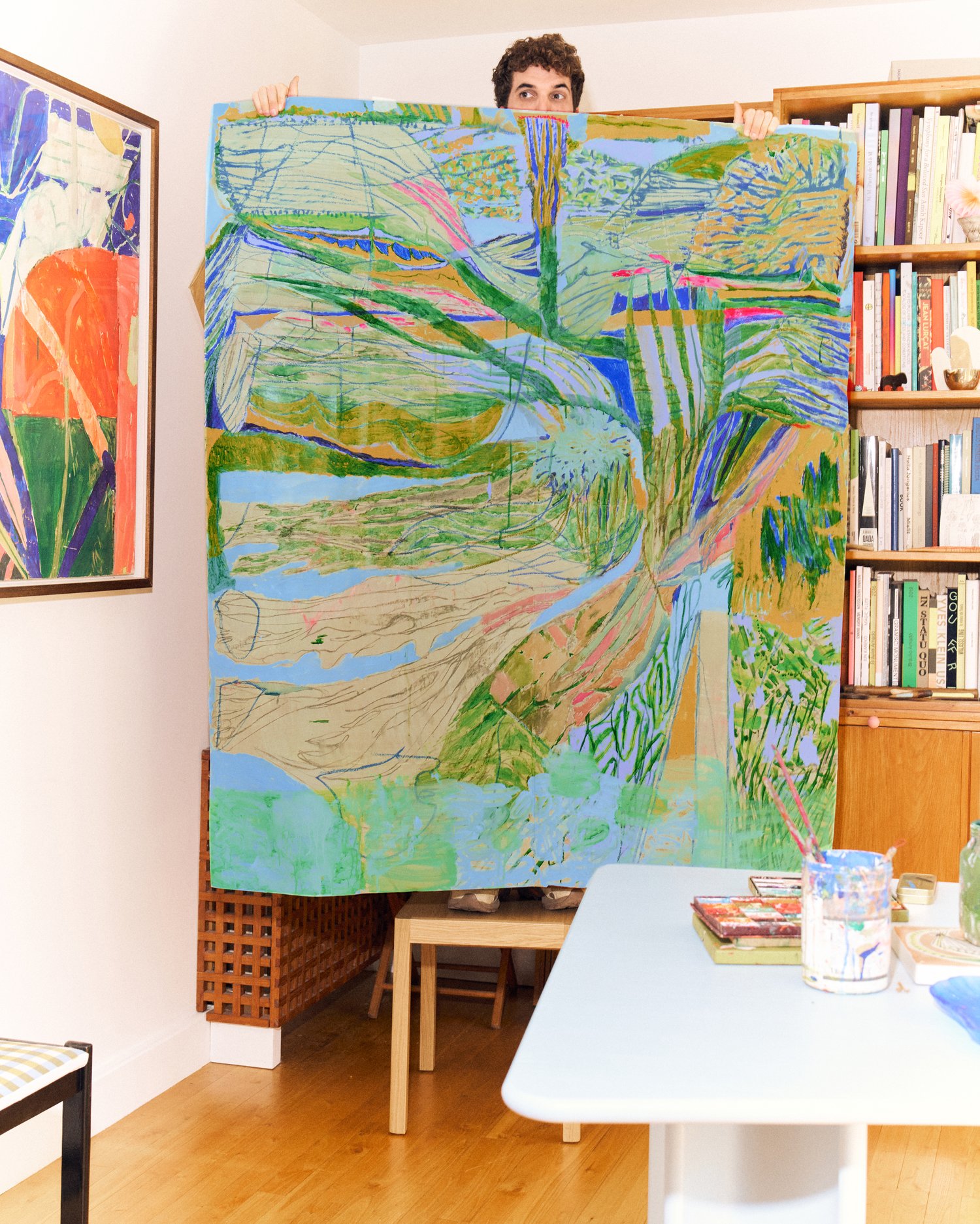
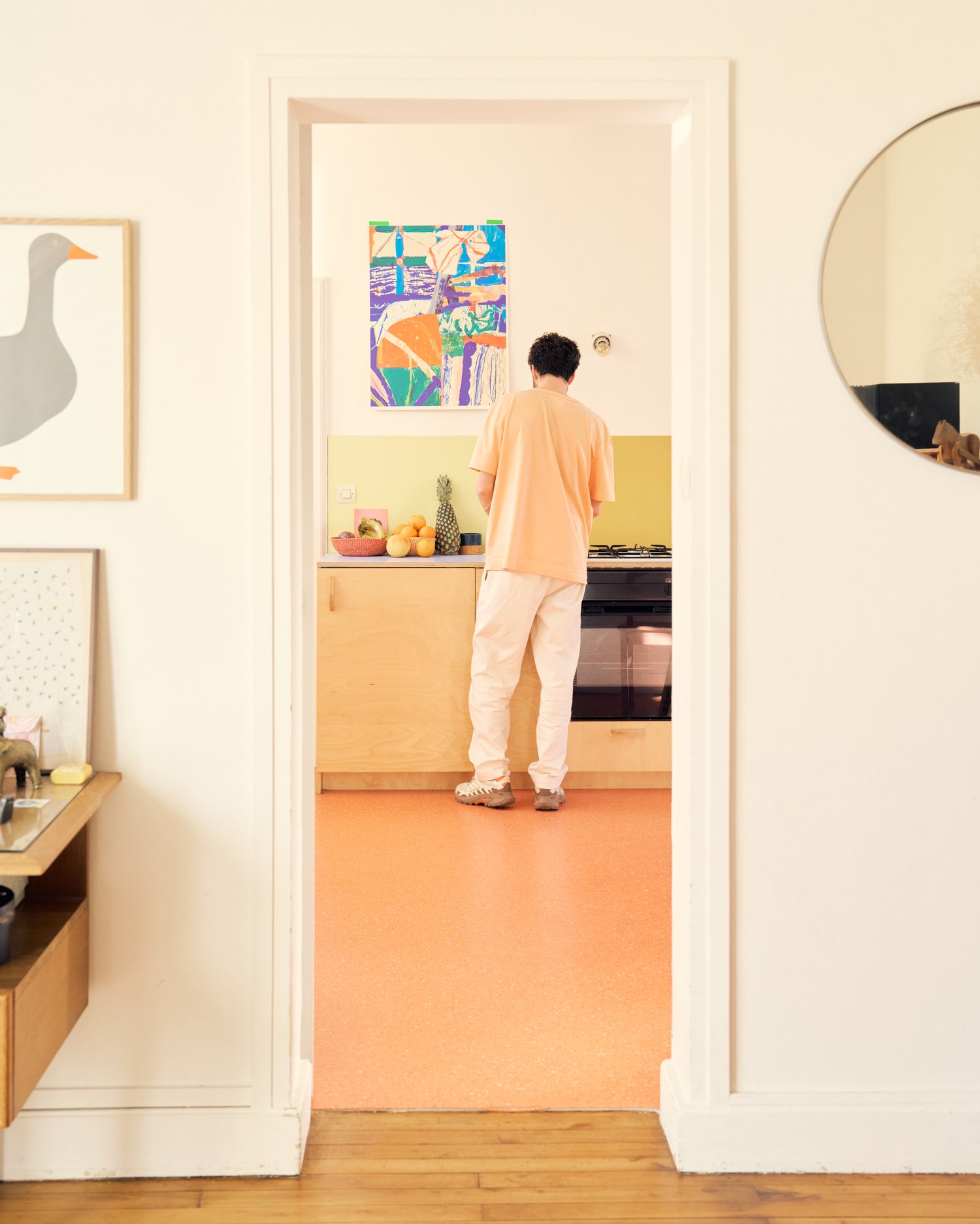
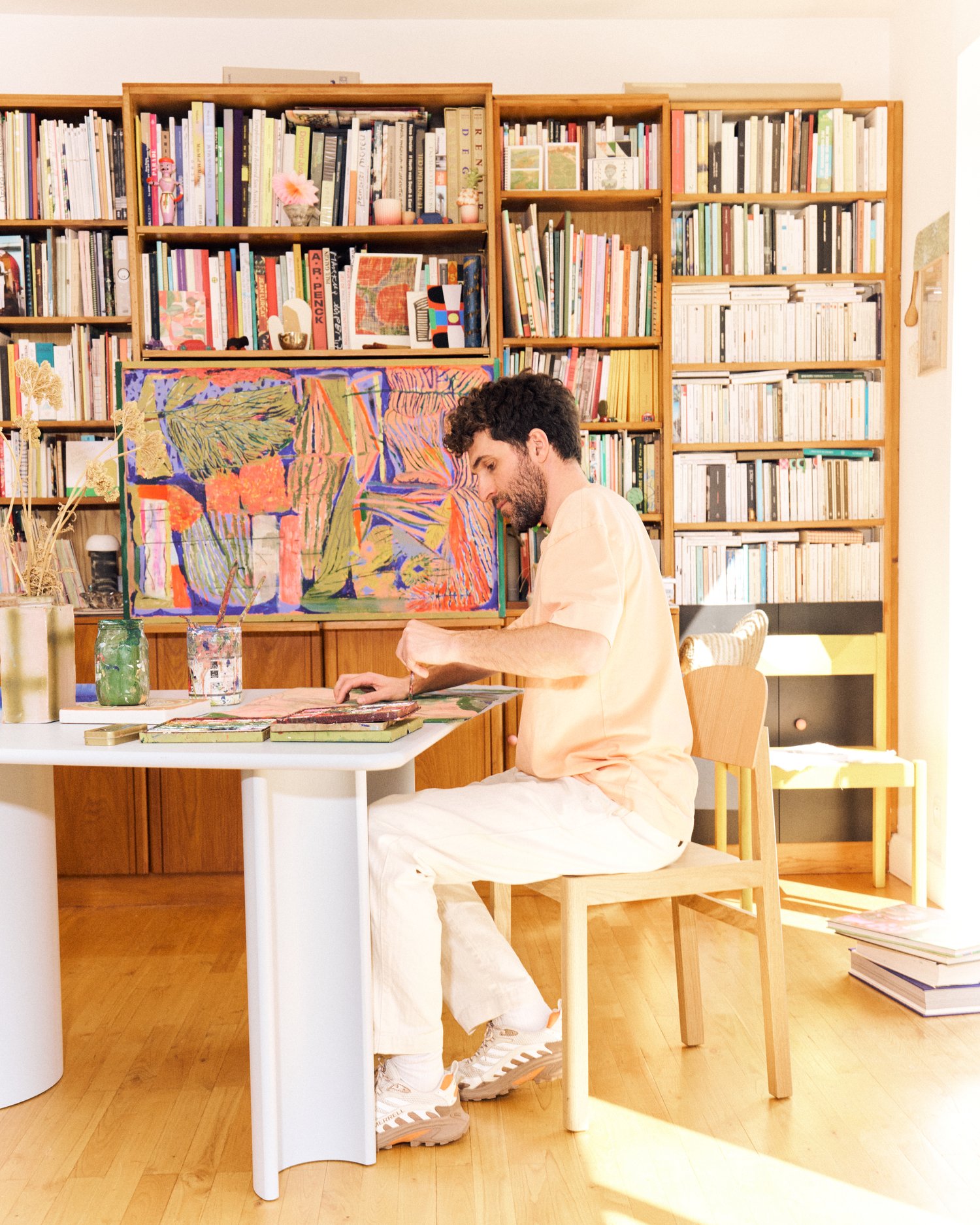
We visited French artist Geoffroy Pithon in his studio in La Montagne, a village a few kilometers from Nantes. A few years ago, when he and his partner were looking for a larger home after the birth of their first child, they found a house that already included a small painting studio. The previous owner, an architect, had created the room for his own practice. For Geoffroy, who had spent several years working in shared studios, it offered the chance to work from home and bring family life and his artistic practice closer together.
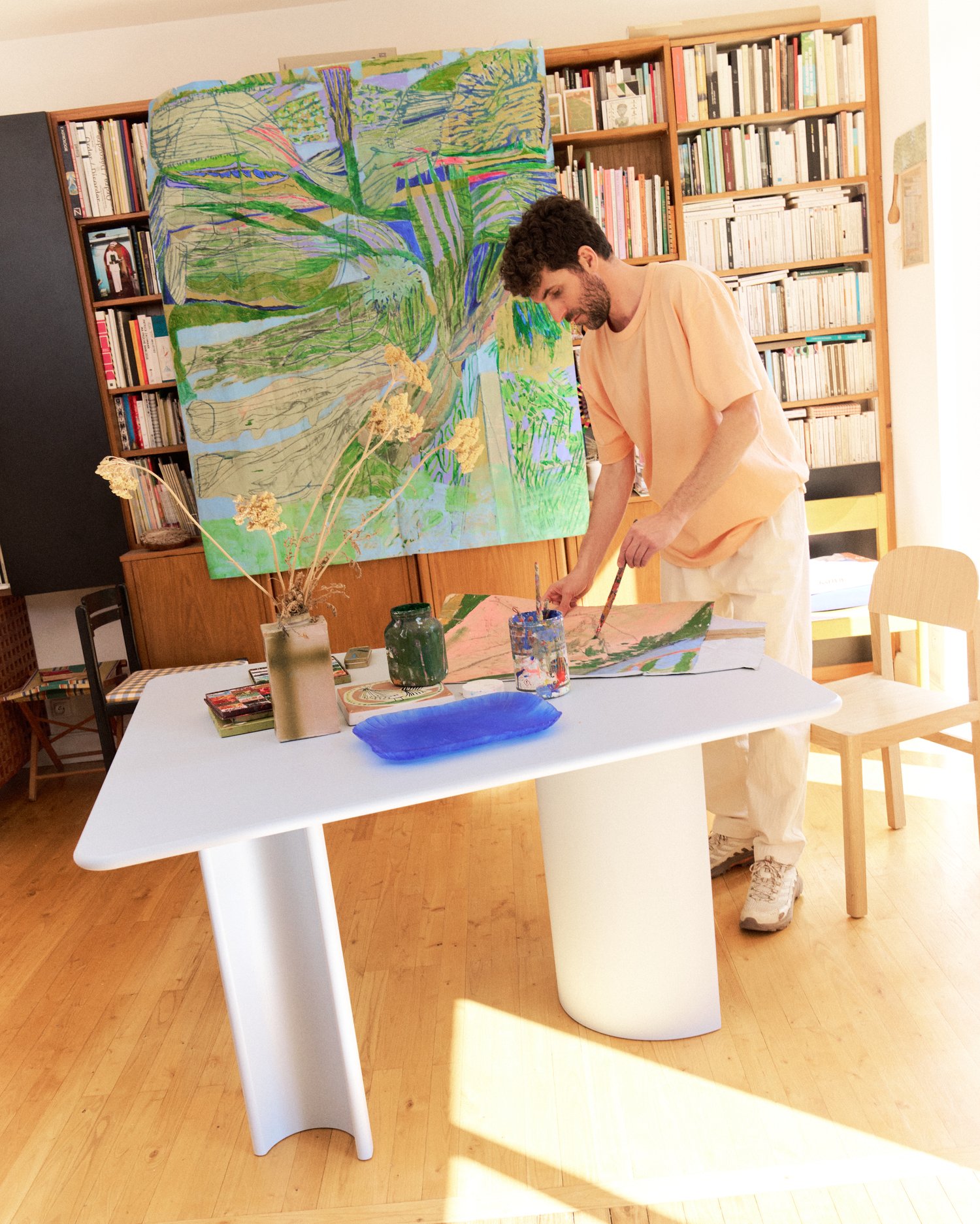
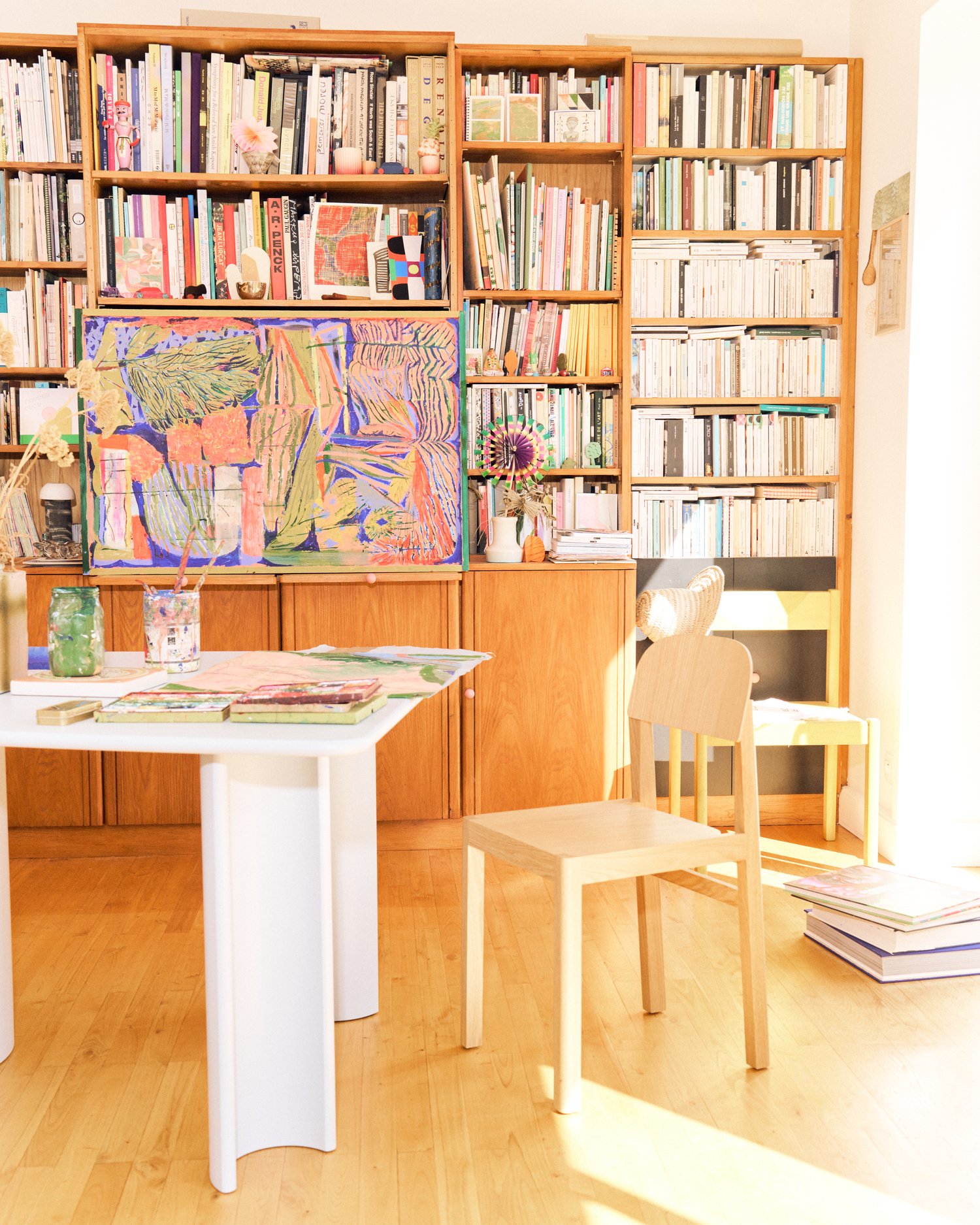
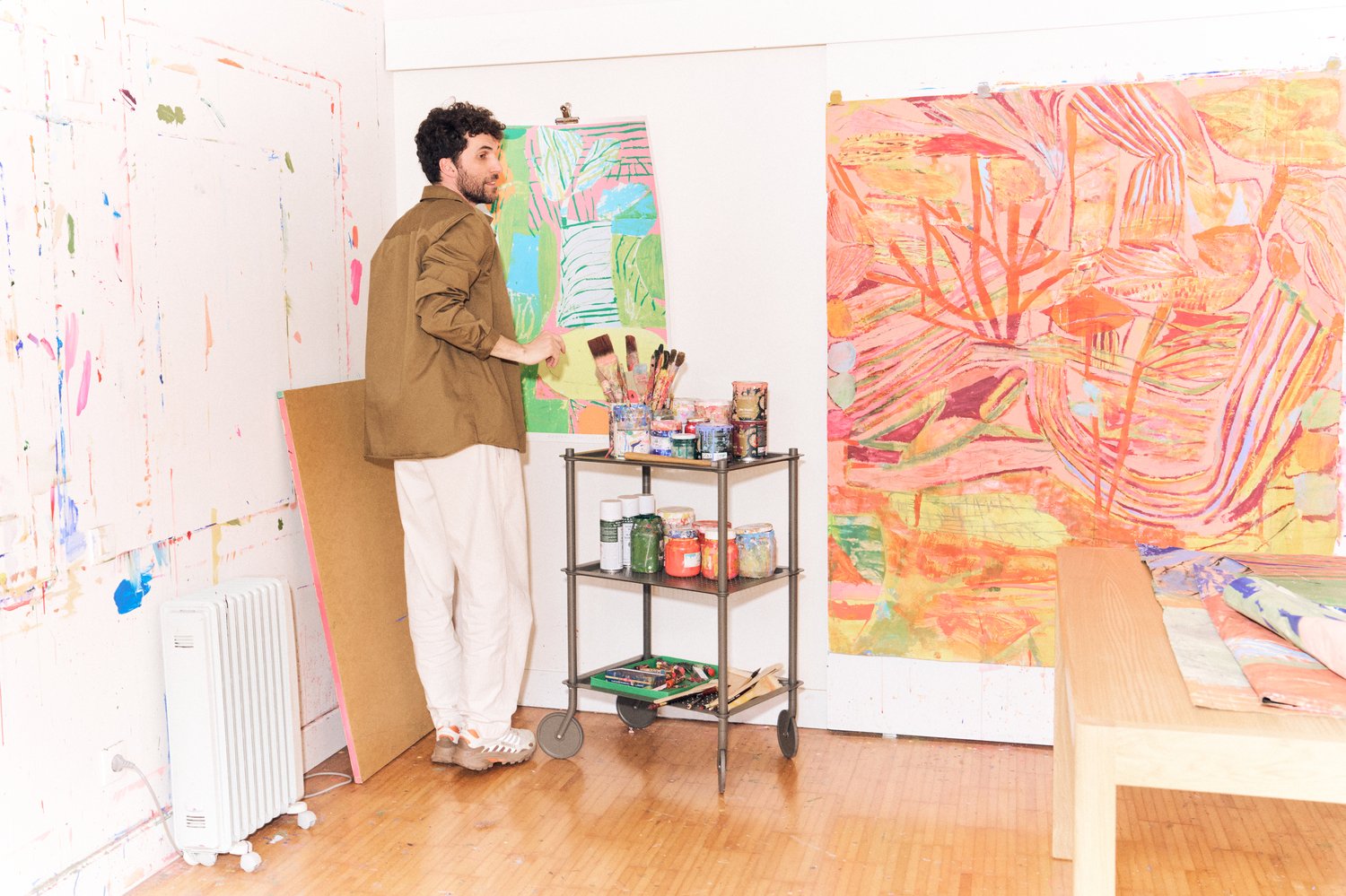
The studio is smaller than the large, dedicated workspace Geoffroy might once have pictured for himself, but it has become central to the way he works. Its modest size allows him to stay close to family life while still giving his practice a room of its own. It receives soft afternoon light and sits in natural continuity with the rest of the house.
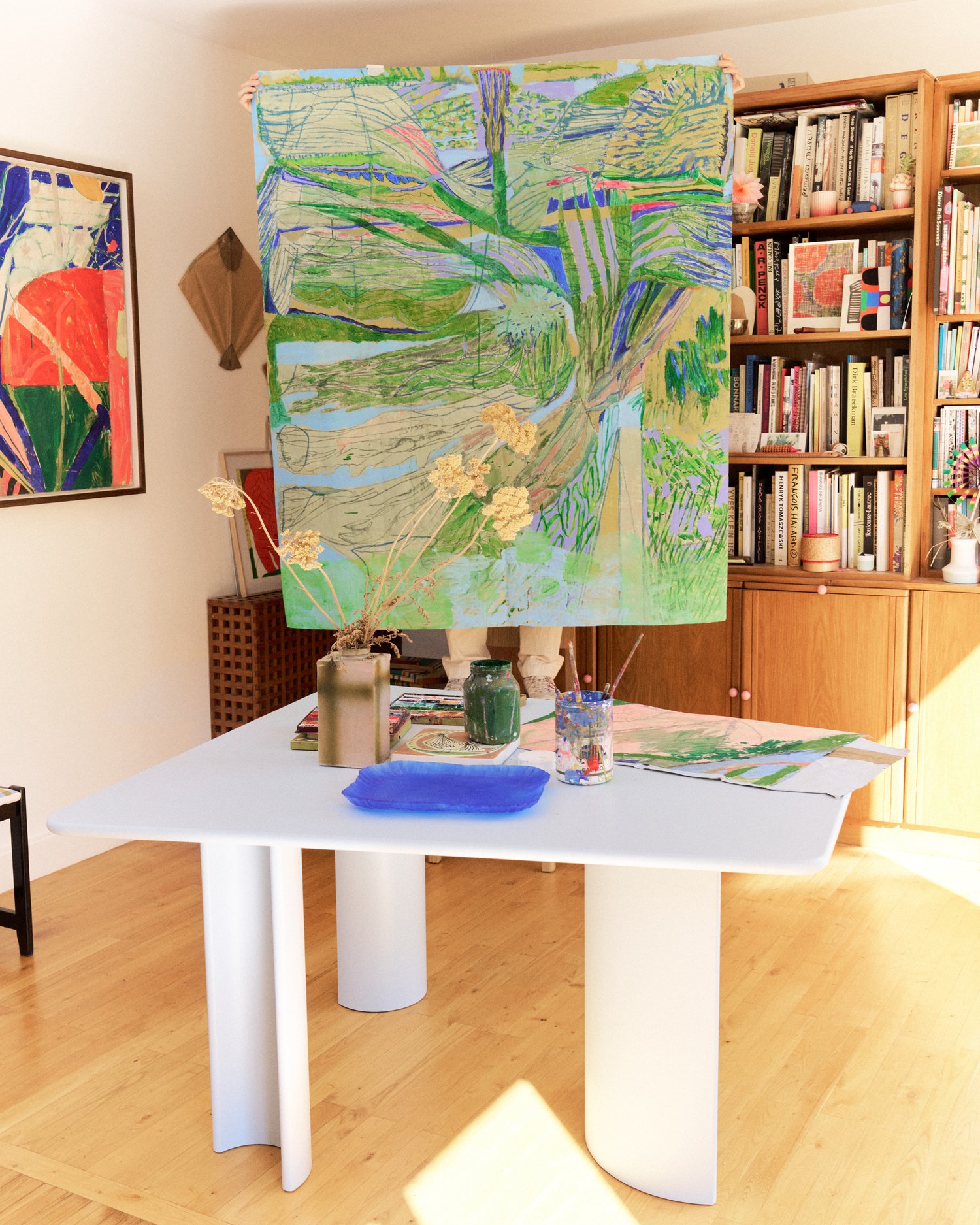
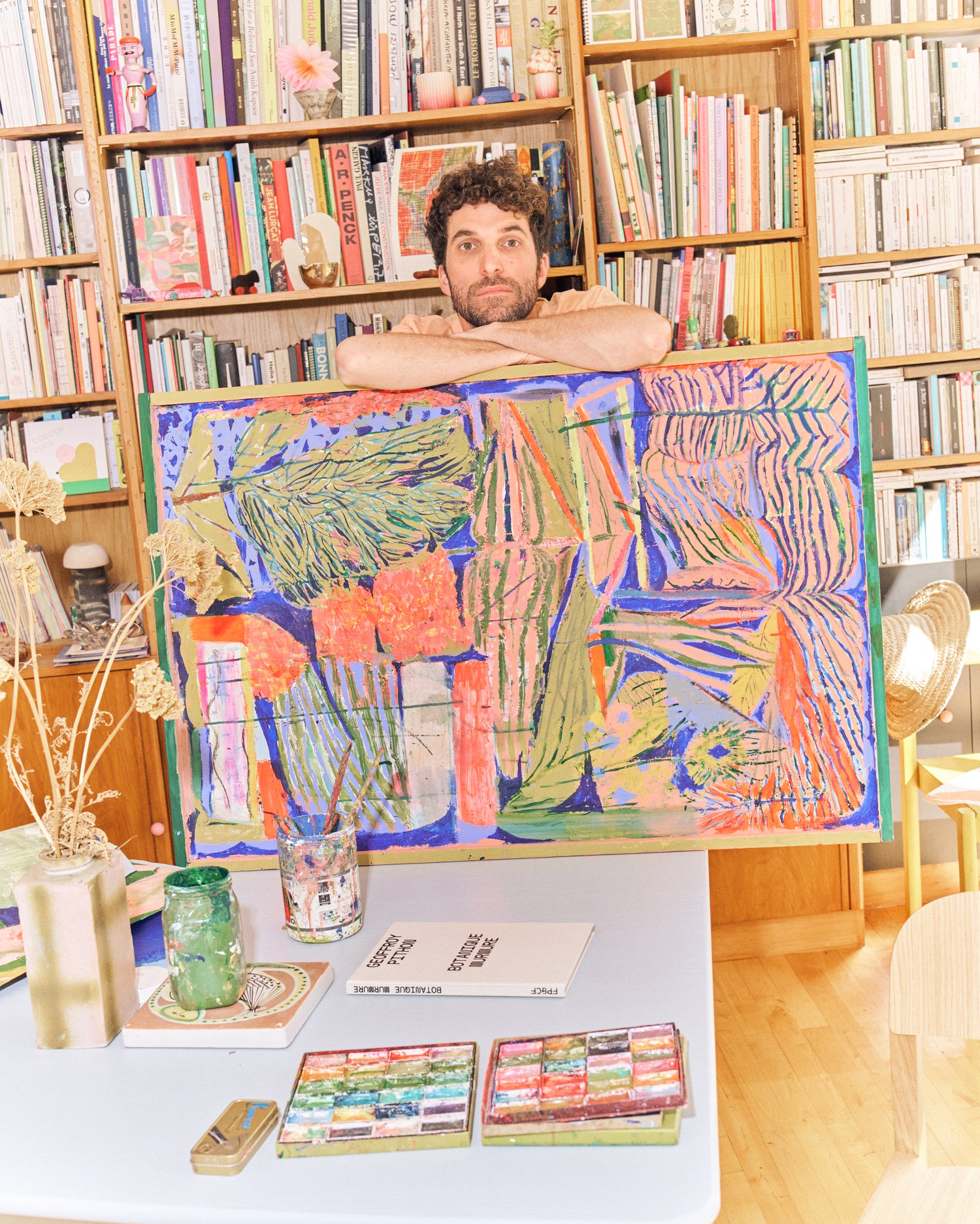
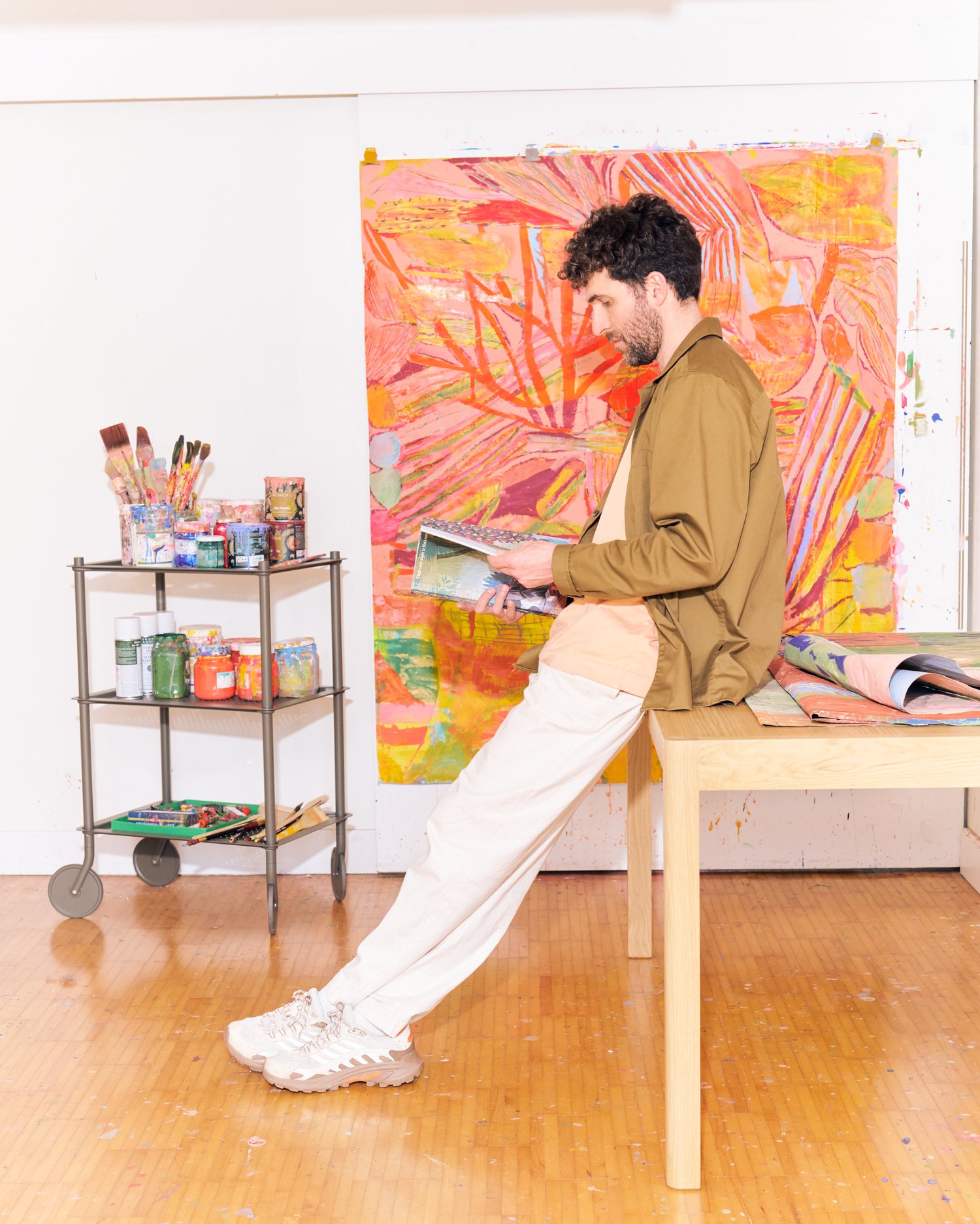
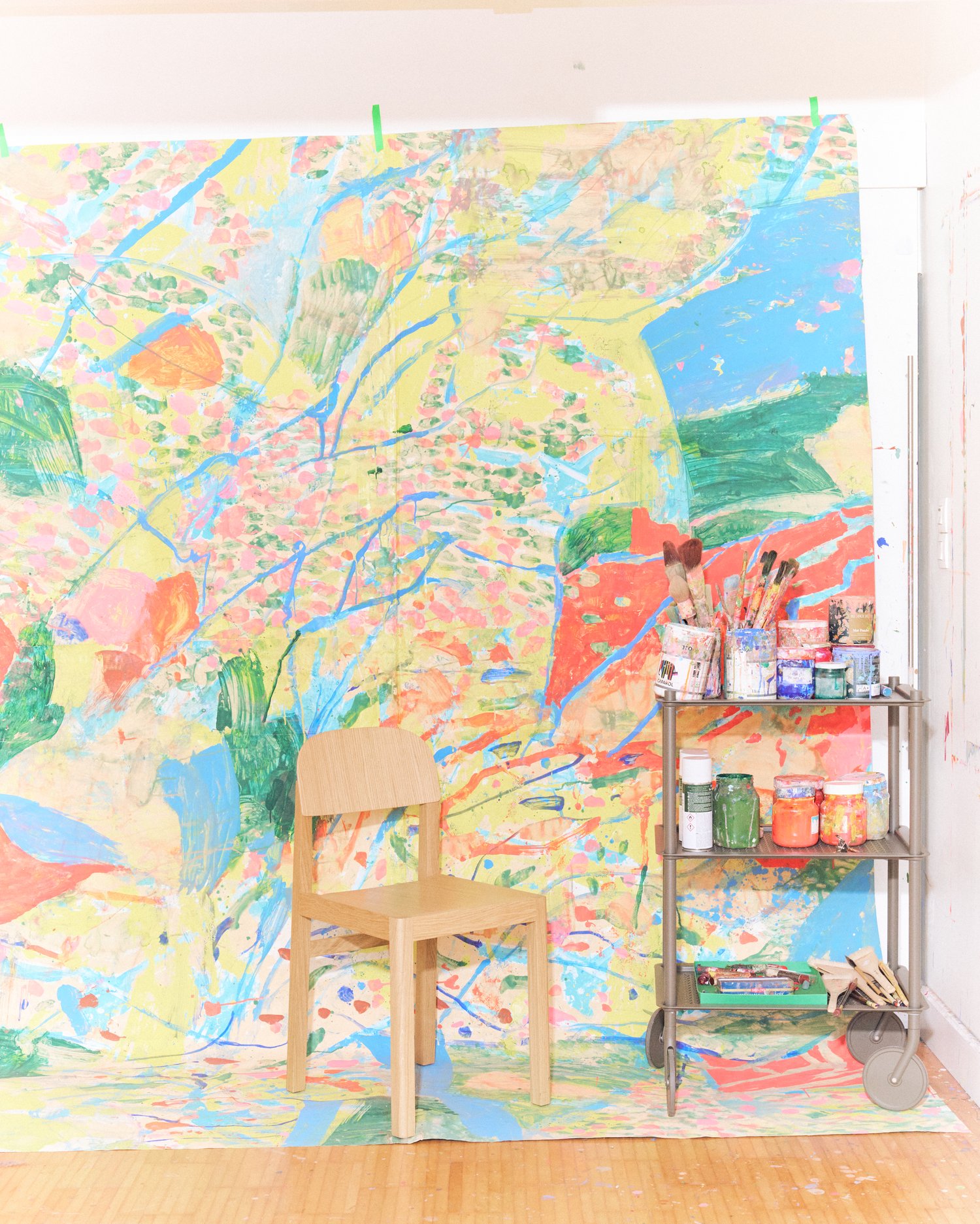
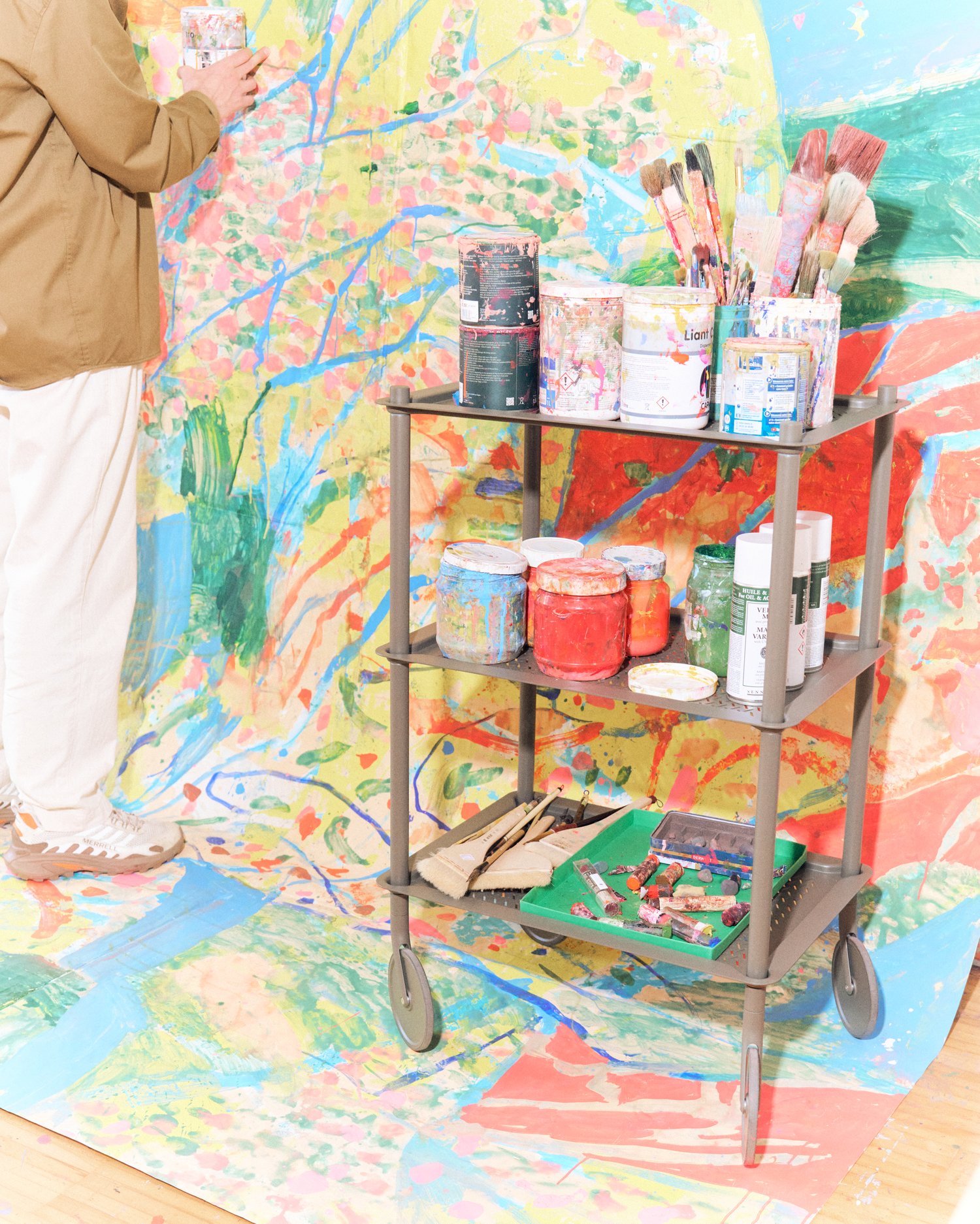
Books, paintings, paper, pigments, and works in progress fill the space, giving it the feeling of both a workspace and an evolving archive. Large works lean against the walls, smaller studies gather across shelves and tables, and fresh pigments sit beside older mixtures that have faded or changed over time.
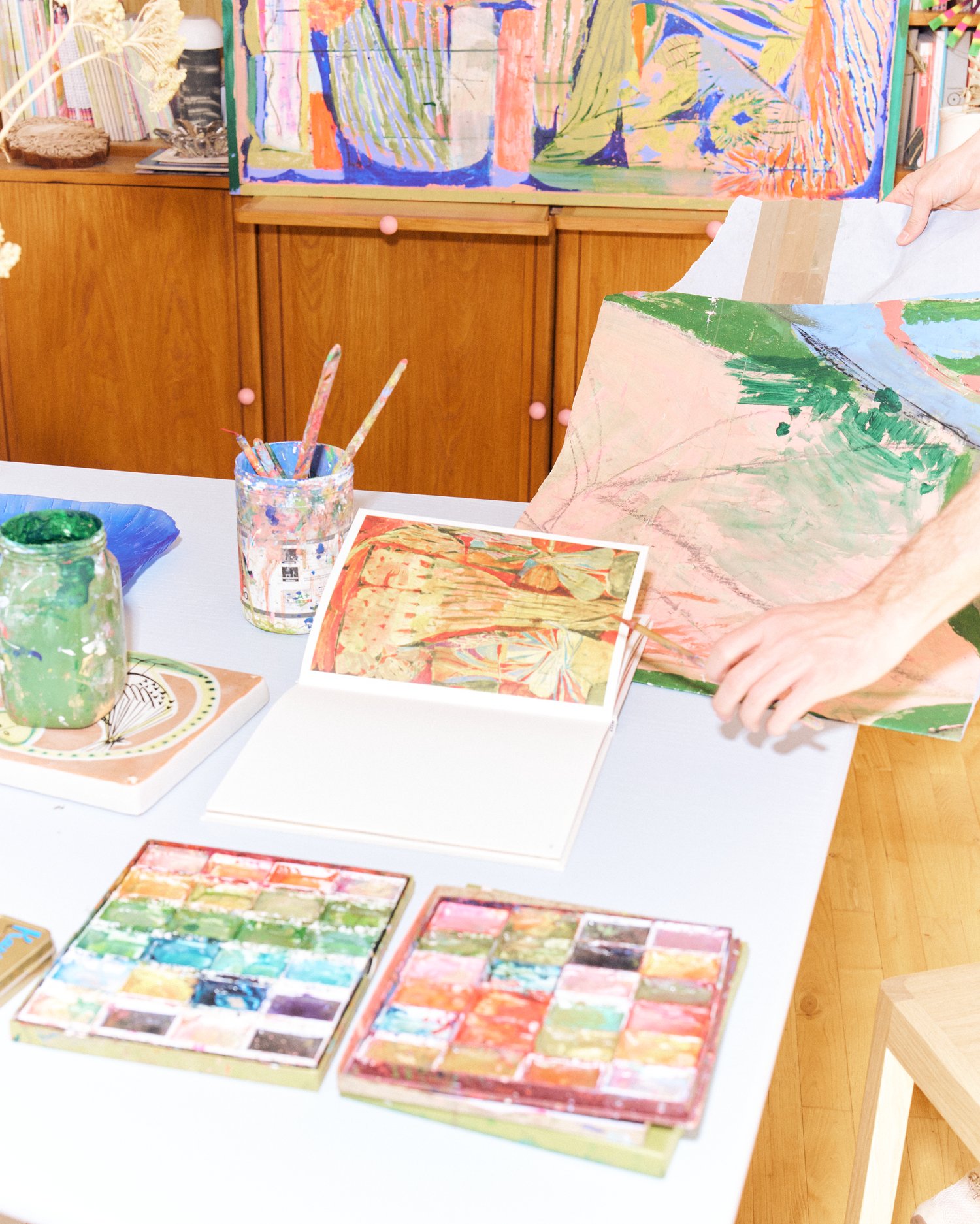
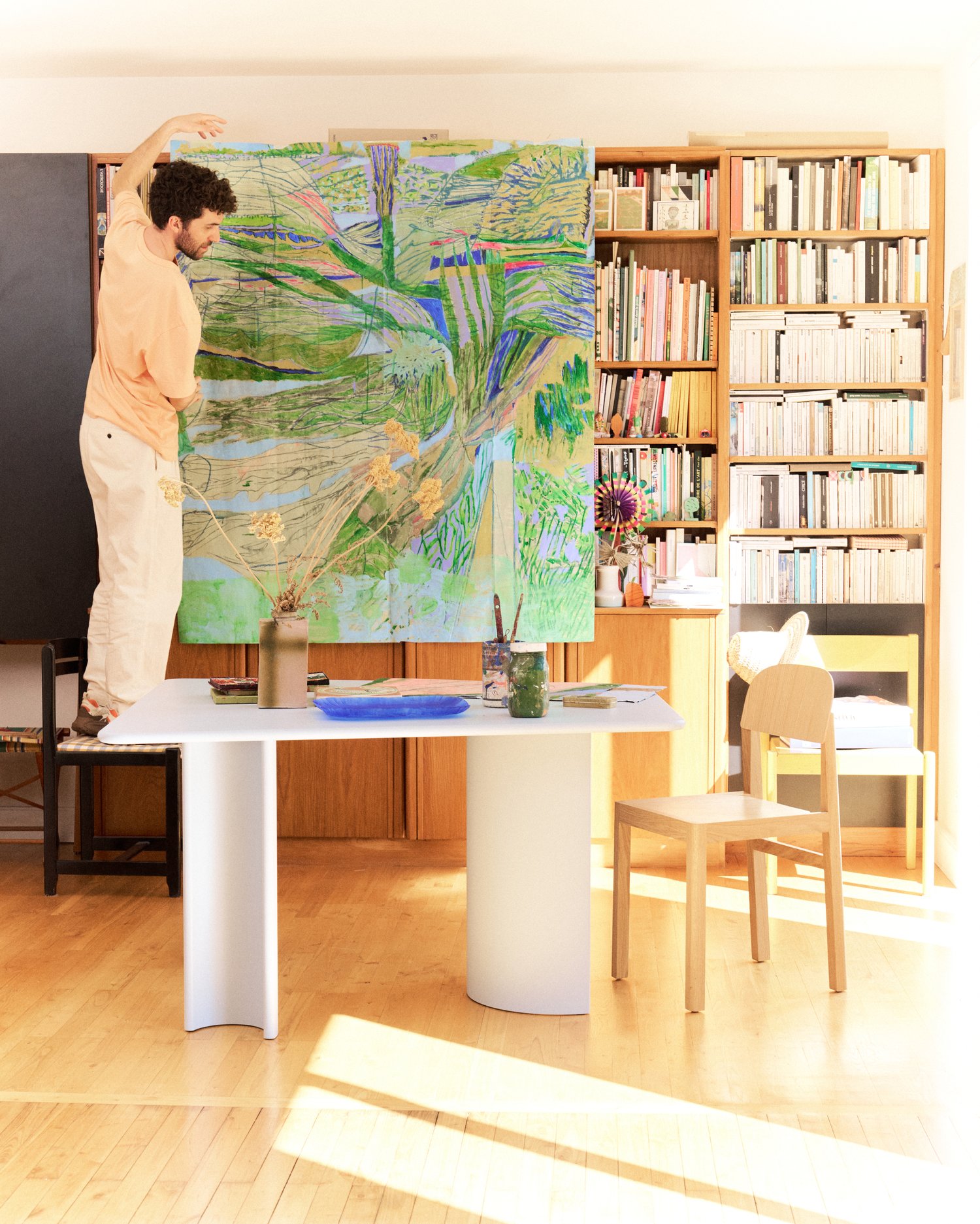
A former graphic designer and self-taught painter, Geoffroy works across painting, paper, and installations. Some works are made on the floor, involving the full reach of the body, while others take shape more slowly with watercolor, pencil, and paper. At home, the Re-Norm Table supports what he calls “work at the table”: a quieter and more intimate way of making his art.
Its unconventional form also reflects Geoffroy’s wider interest in objects that move beyond familiar habits. For him, good design does not simply support an activity. It shapes how people approach a space, how they move within it, and what might happen there.
A few years ago, when we had our first child, we began looking for a larger house outside the center of Nantes. I also wanted to be able to work from home. I had spent several years in shared studios and felt the need to refocus on my own practice. We found this house a few kilometers from Nantes, not quite in the city and not quite in the countryside. The previous owner was an architect who had created a small painting studio for himself, and having a dedicated room for my work suited me perfectly.
It is not an enormous studio, but it allowed family life and my artistic practice to develop at the same time. It has soft afternoon light, a mezzanine, and a few walls where I can place paintings. Over the years, it has become a kind of headquarters where I imagine projects, work on the computer, look through books, make calls, and paint.
Your work moves across formats and scales. What connects it all?
Form and color are the backbone of my practice. I am trying to build a pictorial language that feels personal and recognisable, whether the work becomes a large installation, a small edition or a collaboration. The format may change, but the same visual language runs through it.
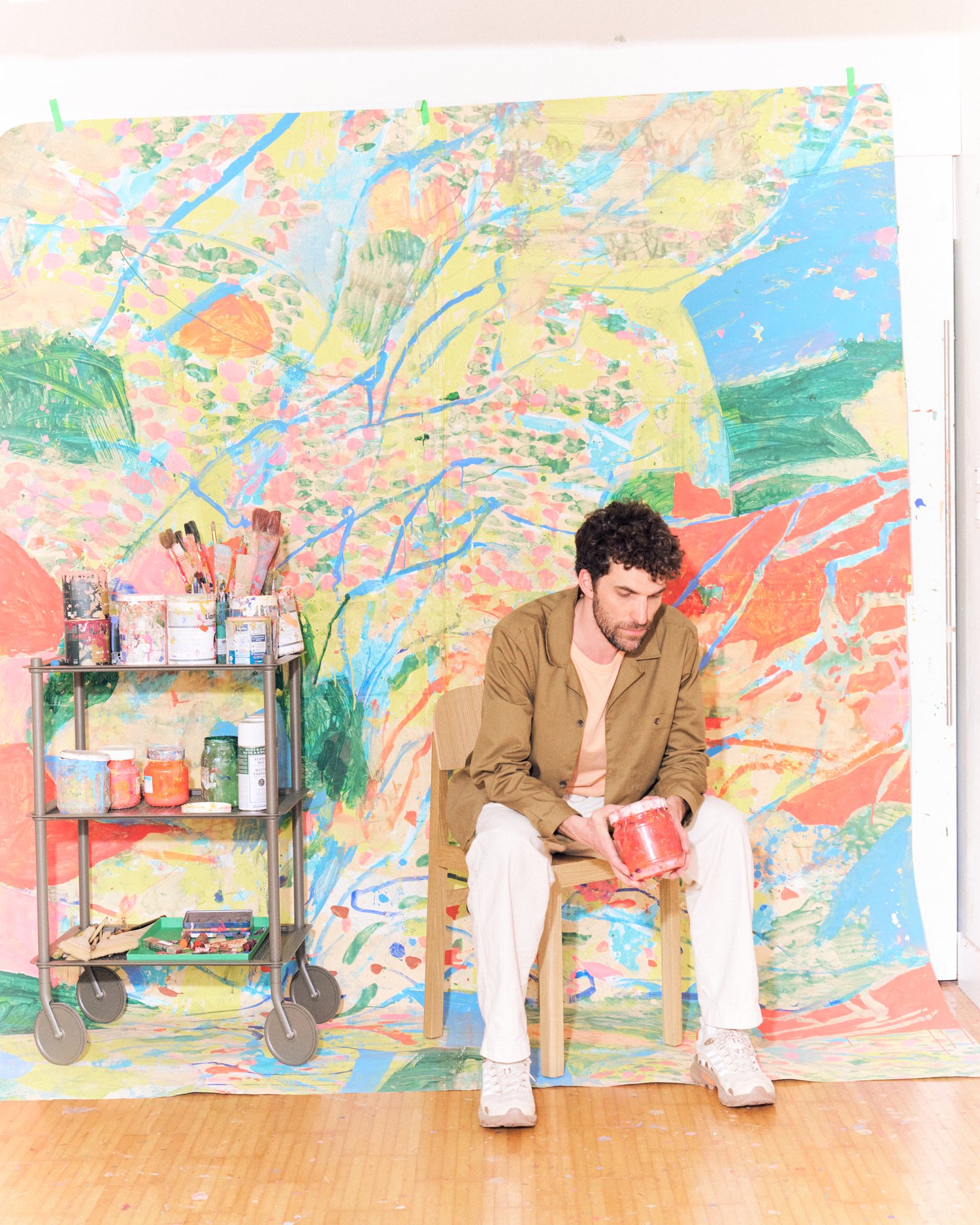
Color is central to that language. I make my own colors from powdered pigments, balancing fresh, saturated tones with older, more faded or earthy mixtures. That tension creates the harmony.
Painting begins as a kind of chaos that I try to organise. I hope the finished work keeps some of the pleasure and force of making it. For me, color is energy, and I want that energy to become contagious while still leaving room for people to bring their own memories and sensations to it.
“Color is energy. I want that energy to remain in the work and become something another person can feel.”
How does the Re-Norm Table fit into the studio?
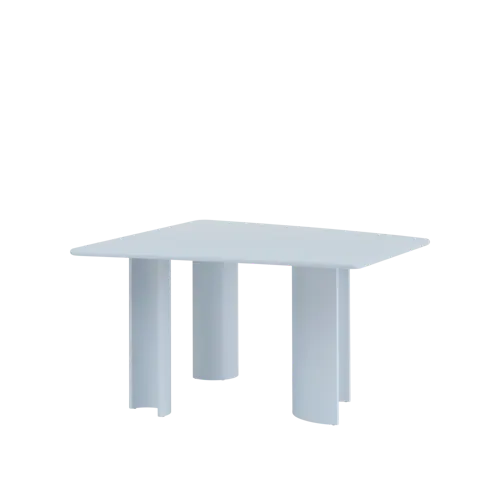
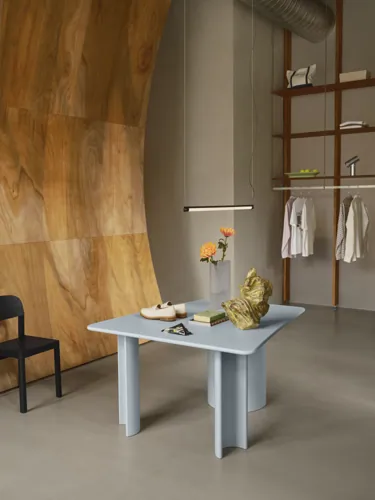
What interests me about the Re-Norm Table is that it moves away from conventional forms. We have deeply rooted habits around everyday objects such as tables and chairs, so when their shape changes, it can encourage us to move, sit, and work differently. The table has a certain boldness, and I like that it questions the standards we usually accept without thinking about them.
In the studio, it supports what I call “work at the table.” I use it for smaller formats, placing a sheet of paper on the surface and working with watercolor, pencil, or more precise tools. It creates a very different attitude from working on a large scale on the floor, where the whole body is involved. At the table, the body settles, the gestures become smaller, and the concentration is more intimate.
Its angles and curves also influence how you approach it and where you position yourself. It does not impose one obvious way of sitting or working. For me, that is what good design can do: it does not simply support an activity, but changes the conditions around it and opens up other possibilities.
The table also carries a sense of gathering. I can imagine several people working around it at once—architects drawing together, or musicians placing instruments across it and creating something collectively. The shape would help organize not only the scene, but also the circulation of ideas.
“A table on its own can be beautiful, but a table brought to life by people is even stronger.”
What keeps the studio in motion?
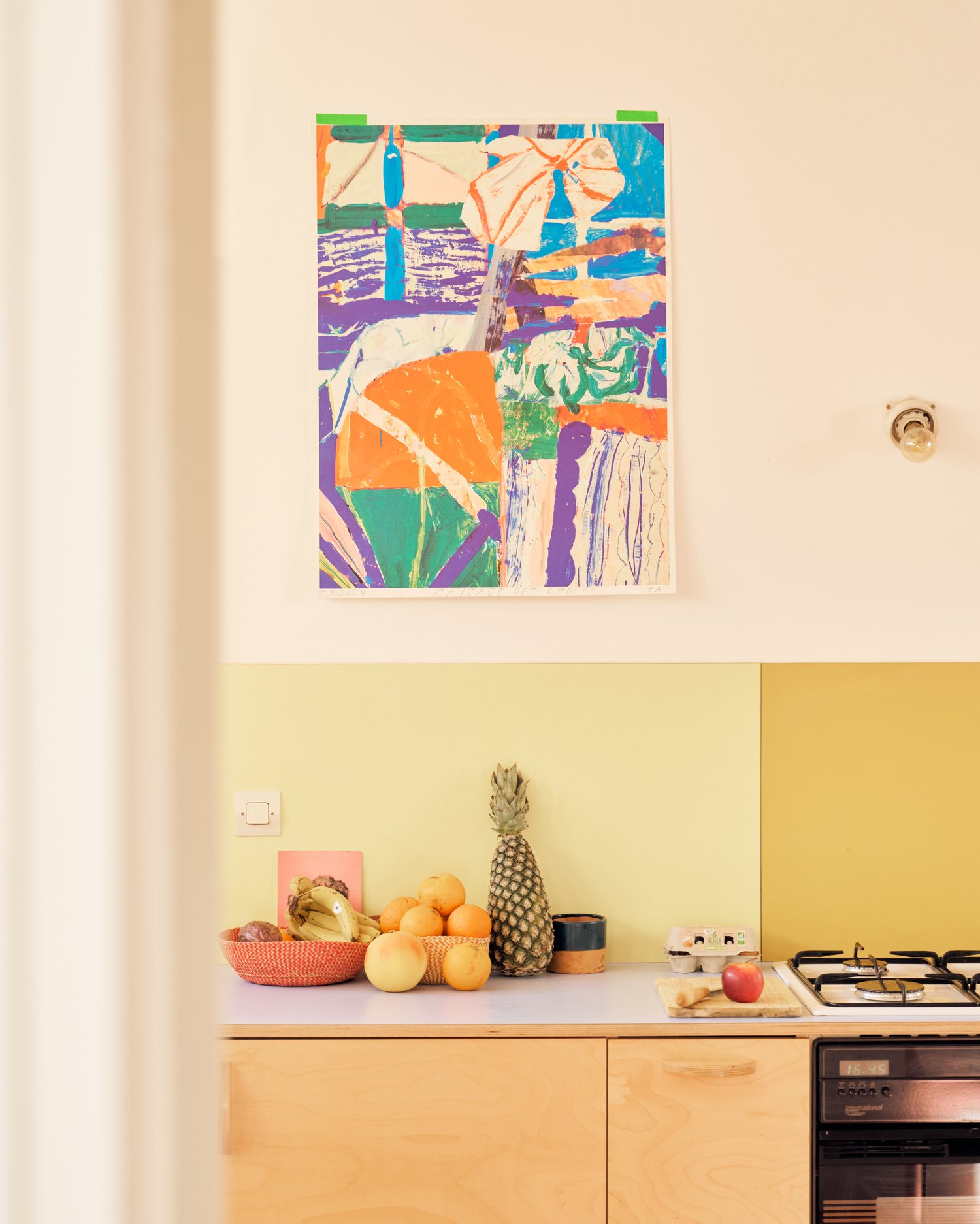
The space lets me move between very different ways of making. I can work on something large on the floor and then sit down at the table with a sheet of paper, watercolor, and smaller tools. Colors, unfinished works, and materials remain visible, so one project can naturally lead into another. I still like how closely the studio connects to the rest of the house, the kitchen, the garden, my family, the books, and the school next door. All of that inevitably finds its way into the work.
I often feel that every project is part of a larger structure that I cannot fully see yet. Each work is a sketch, a small experiment, or one piece of something broader. The studio is where those fragments begin to connect. A color left on the table, a small drawing, or an unfinished work can open the way towards the next project. I may never see the complete picture, but that is what keeps me moving. It is probably the work of a lifetime.
“Every project feels like a sketch for something larger that I cannot fully see yet.”